
New Joint Webinar Programme Announced
09-01-2021
On World Cancer Day, we recognise the researchers, clinicians and organisations working together to test new ideas and build the evidence needed to improve cancer care in the future.
The day also gives us an opportunity highlight some of the research that could make cancer treatment more effective and less difficult for patients.
Below are just three of the potentially life changing clinical trials being led by Registered Clinical Trials Units.
Follow us on BlueSky and LinkedIn to find out more about the valuable work being undertaken across the Network.
At Cardiff University’s Centre for Trials Research, we are supporting the PICCOS study, which is looking at a different way of giving chemotherapy to people whose cancer has spread to the lining of the abdomen. This can happen in ovarian, bowel and stomach cancers.
When cancer spreads in this way, it can be very hard to treat. Standard anti-cancer treatment is usually given through a drip or tablets and travels around the whole body. It doesn’t always reach cancer in the abdomen very well and can cause side effects that have a big impact on everyday life.
PICCOS is testing whether chemotherapy works better when it is delivered directly to where the cancer is. The treatment, called PIPAC, delivers chemotherapy as a fine spray into the abdomen during keyhole surgery. This approach has been used in other countries for several years, but in the UK, it is only available through research studies.
The study is comparing this approach with standard chemotherapy to see which works better and whether it could help people live longer or feel better during treatment. This kind of research is essential before new treatments can be offered routinely by the NHS.
The trial is being delivered by teams from Cardiff University and Cardiff and Vale University Health Board. PICCOS is funded by the National Institute for Health and Care Research (NIHR).
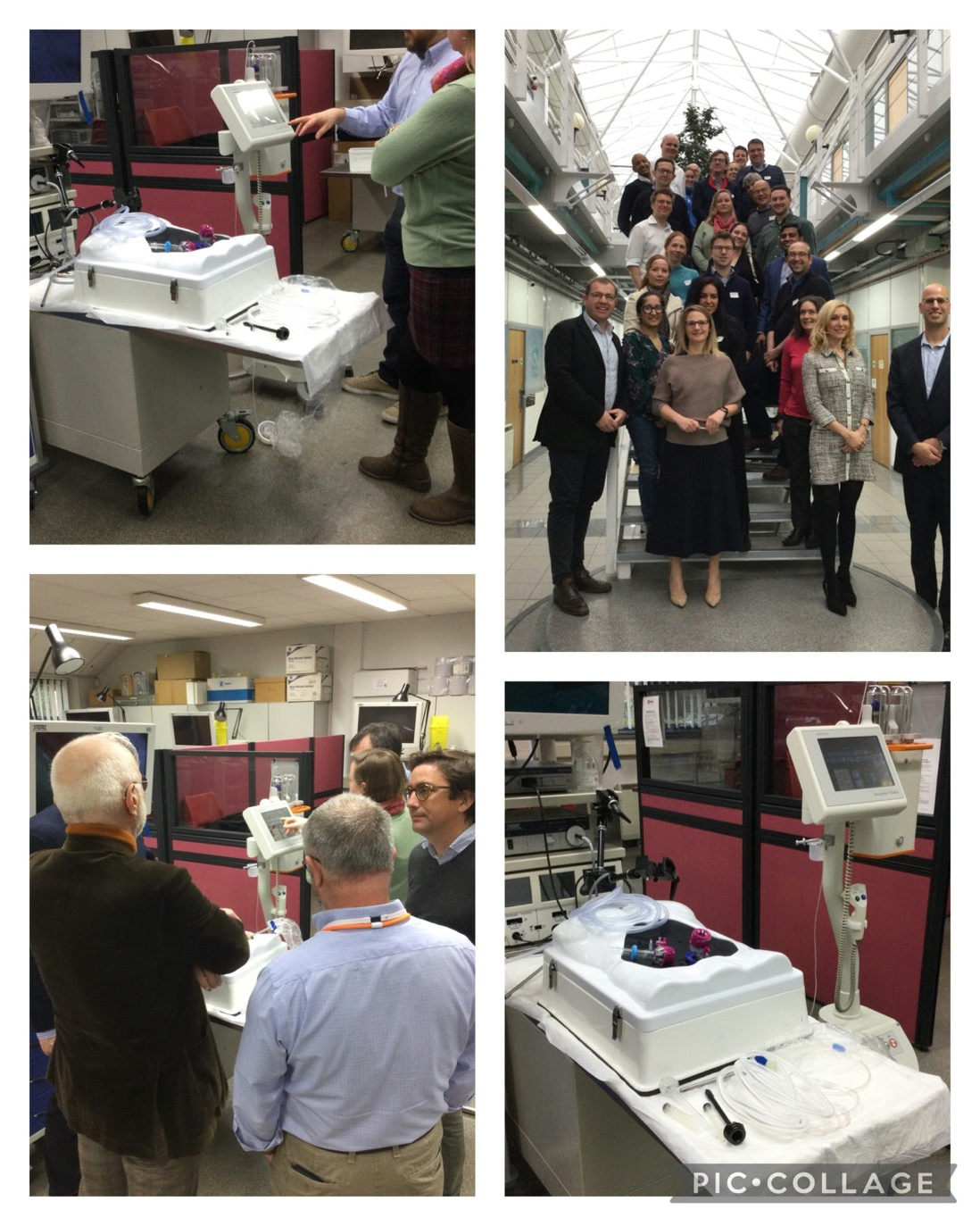
To read more, please visit https://www.cardiff.ac.uk/centre-for-trials-research/research/studies-and-trials/view/piccos
Improved treatments for prostate cancer
The STAMPEDE clinical trial and the STOPCAP M1 meta-analyses looked at several new treatments for prostate cancer to see which ones could help men live longer. STAMPEDE used the multi-arm multi-stage (MAMS) innovative design, and STOPCAP M1 used the FAME meta-analysis approach. These innovative ways of running and combining trials meant that results were available much more quickly and reliably than with traditional methods.
The research showed strong evidence that adding treatments like docetaxel, abiraterone and targeted radiotherapy to the prostate, to standard therapy, helps men live longer and reduces the chance of their cancer returning. These findings changed treatment guidelines around the world. In the UK, this has already given prostate cancer patients up to 31,250 extra years of life combined.
The MRC Clinical Trials Unit at UCL made this possible by designing efficient trials, bringing together large groups of researchers and hospitals, and carefully combining results from multiple studies. Their systems helped trials recruit quickly, test new treatments sooner and produce high‑quality evidence to guide doctors and improve patient care.
Find out more about these and other studies undertaken by the MRC CTU at UCL here.
Access to promising new treatments for B-cell non-Hodgkin Lymphoma
Most young people who get B-cell non-Hodgkin Lymphoma (B-NHL) get better with treatment, but if they don’t get better or if their cancer comes back there is no other good treatment to help them. This means the way clinical trials usually work is not good for these patients because it would take too long to test 1 new treatment at a time. Instead, the Glo-BNHL trial offers lots of promising new treatments for patients and their doctors to choose from.

Companies with new treatments that might benefit patients apply to take part. A team of experts asses the suitability of the treatment and prioritise those that are most promising. Treatments will be regularly assessed and those that do not show statistically significant benefits for patients will be deprioritised to make way for new treatments. Where treatments prove of benefit to patients, companies will use the data from Glo-BNHL to apply for marketing authorisation, thereby evolving standard of care.
Patients in the UK are already able to access two new treatments, both of which are first-in-child, and patients in the US, Canda, Australia, New Zealand and across Europe will soon be able to access them too.
The concept came from the 2nd ACCELERATE Paediatric Strategy Forum, which examines the primary concerns in paediatric oncology. The Cancer Research UK Clinical Trials Unit (CRCTU) has since been central to the success of Glo-BNHL, bringing together trial management experts, statisticians and the wider research community to design and deliver a trial with patient benefit at the centre.
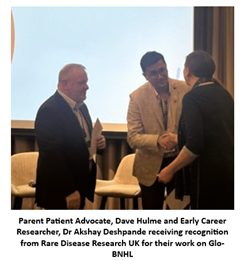
The team at the CRCTU is proud to work with 5 patient advocates, who sit on the Trial Management Group and Trial Steering Committee and form the Glo-BNHL Patient Advisory Group, and with leading academics and clinicians from around the world. Crucially, the CRCTU involves Early Career Researchers to ensure that the next generation of researchers can learn from today’s leaders.
Find out more about the Glo-BNHL trial here.





If you have any questions about the site, please feel free to contact us. We are always looking for ways to better serve our members - YOU are important to us!
If you have any questions about the site, please feel free to contact us. We are always looking for ways to better serve our members - YOU are important to us!