
New Joint Webinar Programme Announced
09-01-2021


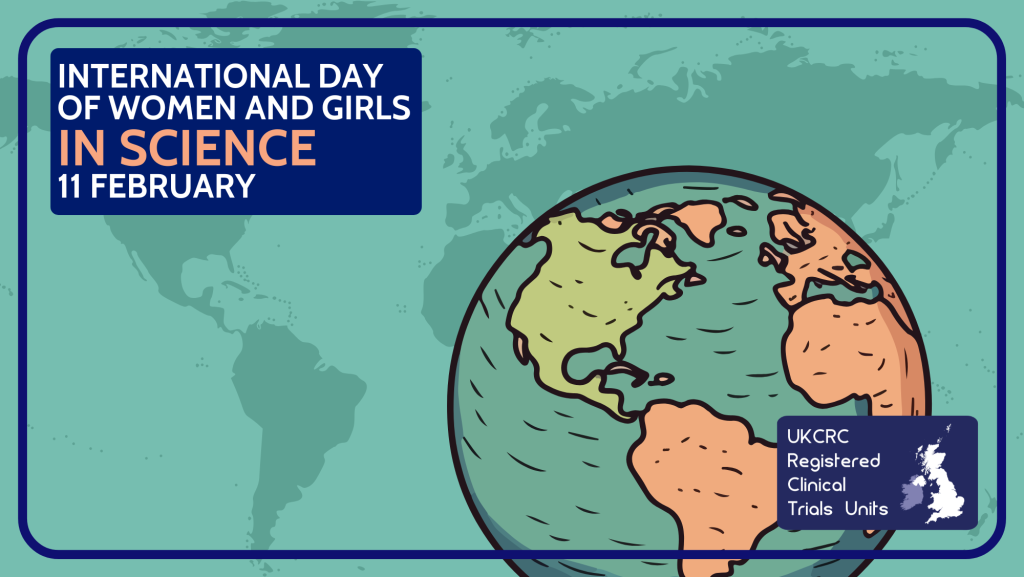
International Day of Women and Girls in Science highlights the vital contribution women make to science and research, whilst drawing attention to the persistent gender inequalities that limit progress. Women and girls represent half of the world’s population – and half of its potential. Ensuring their full and equal involvement in science as researcher or study participant is therefore not only a matter of fairness, but essential to achieving high‑quality, impactful, and sustainable research.
The theme of International Day of Women and Girls in Science 2026 is “Synergizing AI, Social Science, STEM and Finance: Building Inclusive Futures for Women and Girls”. Read more here.
Despite progress in recent decades, gender equality in science remains elusive. Globally, only one in three scientists is a woman. In the UK, whilst women make up more than three quarters of the NHS workforce, including large numbers of scientific and technical staff, disparities remain stark within academic medicine. Women represent less than 40% of the medical academic workforce, and their representation declines sharply with seniority with only just over one fifth of professors being female.
These patterns reflect structural and cultural barriers that continue to shape scientific careers. Limited access to flexible and part‑time roles, challenges in balancing caring responsibilities, and perceptions that non‑linear or less‑than‑full‑time working is incompatible with progression all contribute to the well‑documented “leaky pipeline”. This is evident in research funding pathways, where applications from women decline at each successive career stage, despite strong participation earlier on.
Addressing these inequalities matters for science itself. A diverse research and educational workforce broadens the type of questions that are asked, the populations that are studied, and the solutions that are developed. Greater diversity among researchers and research leaders strengthens methodological rigour, enhances relevance, and supports better outcomes for patients and communities, particularly those who are under‑represented or experience health inequalities.
The CTU Network is committed to supporting an inclusive and collaborative research environment. Across the Network, women play a leading role in delivering high‑quality, non‑commercial clinical trials. Over 60% of registered CTUs have a female Director, Co‑Director or Deputy Director, with women represented at all levels and across all disciplines including statistics, data management, quality assurance, IS, and trial operations. Women also chair or co‑chair the majority of our network groups.
On International Day of Women and Girls in Science, we recognise the achievements of women across the CTU Network and reaffirm our commitment to reducing barriers, supporting progression, and ensuring that clinical research benefits from the full breadth of talent and expertise available.







If you have any questions about the site, please feel free to contact us. We are always looking for ways to better serve our members - YOU are important to us!
If you have any questions about the site, please feel free to contact us. We are always looking for ways to better serve our members - YOU are important to us!