New Joint Webinar Programme Announced
09-01-2021

International Women’s Day is a chance to highlight how women are helping shape research that responds to real-world needs, through collaboration, care and evidence.
Days like this remind us that science is not only about discoveries, but about people – and about creating space for women and girls to lead, contribute and shape research that has the potential to improve lives.
Find out more about some of the inspirational women working in trials units across the Network below.
“The role of a trial statistician takes many forms: from monitoring data quality, reporting to independent committees on patient safety, to deciding how to analyse the final data in a way that is rigorous. I have always had a keen interest in numbers, having a degree in mathematics from the University of Oxford and a PhD in Statistics from UCL.
I was drawn to working in clinical trials as an opportunity to use this interest to contribute to health policies that would help make patients’ lives better. It is essential to have a diverse range of people working in science and research because of how their voices can shape research, for example in clinical trials we want to understand how different treatments can work differently in certain groups.
Women and girls can bring great insights to research, especially in areas where they have not been historically well represented.”
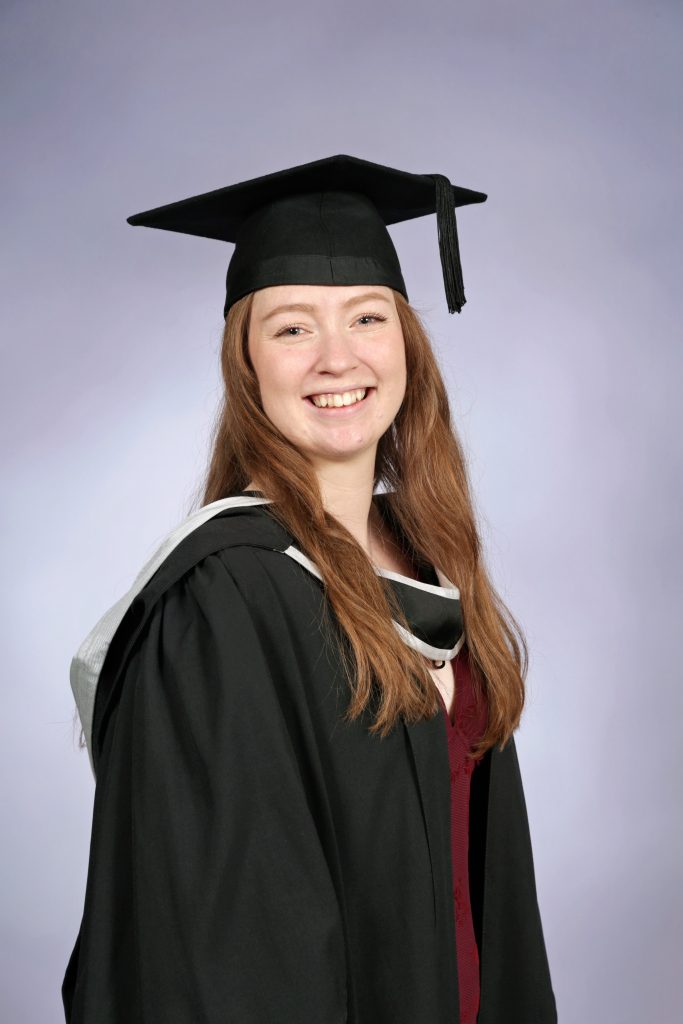
“I always knew I had an interest in human biology, particularly cancer, but didn’t enjoy being hands on in the lab. I had been to some conferences with a friend who was a Patient Advocate on a breast cancer clinical trial which is where my journey into Clinical Research really started to take off.
Moving to SCTU for this role has been one of my greatest decisions. I love doing what I do as I know on a day-to-day basis that each sample, measurement, or questionnaire that we ask our participants to undertake leads to us understanding the bigger picture of the disease, treatment or therapy we are investigating. This job allows me to use some of my expertise from my degree in a way that wasn’t presented to me whilst at university.
I’ve always been passionate about the involvement of girls and women in science. My mum, a former biomedical scientist and now a science teacher, always encouraged me to pursue my passions regardless of what they may be and regardless of my gender. At the end of the day, our interests are what make life enjoyable!”
“My interest in clinical research began with a curiosity about how evidence is created and used to improve healthcare. Working in a Clinical Trials Unit allows me to contribute to the design, conduct and reporting of high-quality trials and systematic reviews that can directly influence clinical practice and patient care.
Women and girls are essential to science. Diverse perspectives strengthen research and lead to better, more inclusive outcomes. Supporting and encouraging women in research helps build a stronger future for science and healthcare.”
“I have always been fascinated with data and problem solving, and I’ve been passionate about channelling this towards a meaningful cause such as cancer research. I was not aware of the various research roles within a Clinical Trials Unit until I came across this role after graduating, and it turned out to be a perfect fit.
I thoroughly enjoy my role and working with my colleagues. I love solving problems and managing data to answer research goals, which directly contributes to evidence based research.
We need more women and girls to be passionate about science. If you like to be curious, to ask questions, to explore and be creative, then science wants people like you! We need unique perspectives and ideas which fuel better research, stronger evidence and brings meaning to everything we do. Science is bright and beautiful. You won’t know what it can offer if you don’t try.”
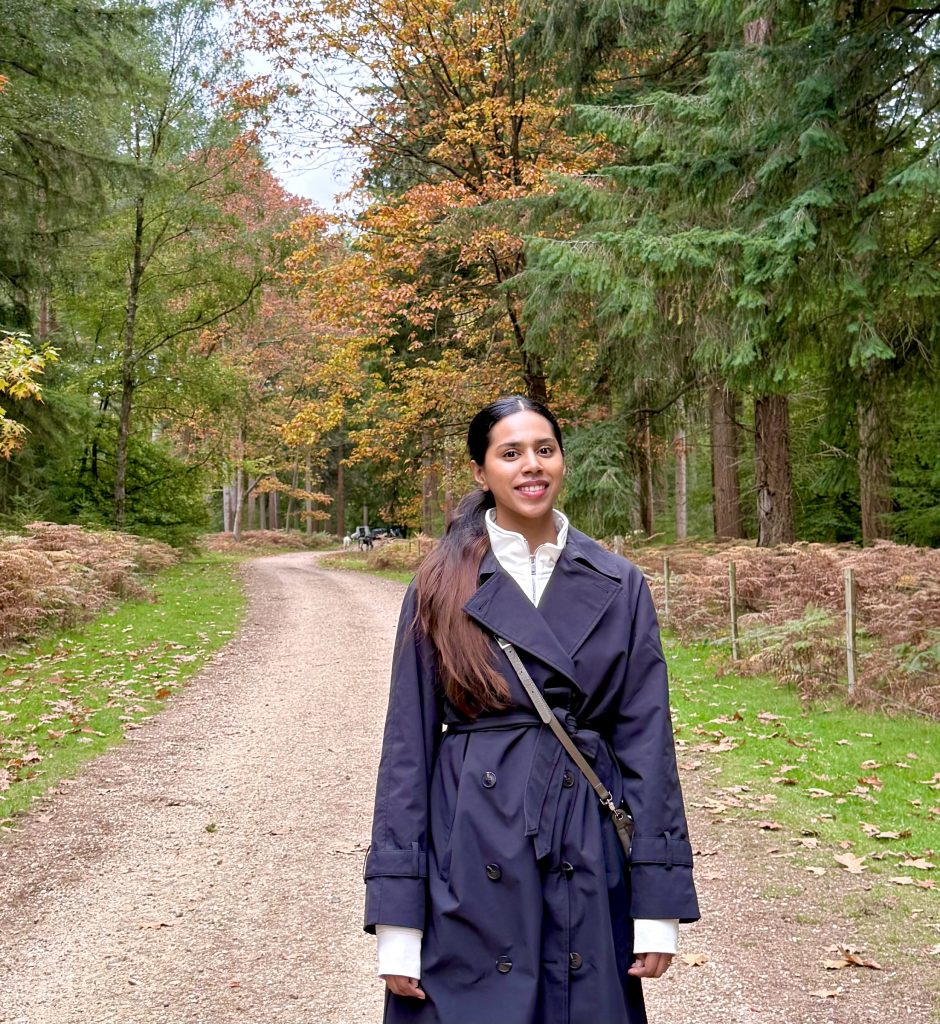
“Being the statistician on these studies involves being part of the set-up stage of the trial, planning data collection, closely monitoring participant data as the trial recruits participants, assessing data quality at regular intervals and finally, conducting analysis on all data collected and reaching an answer to the trial’s primary question.
My interest of working specifically in clinical trials began while I was studying an MSc in Medical Statistics. I enjoyed the module on ‘Clinical Trials’ immensely and wanted to gain experience of working on real-life randomised controlled trials. This led me to my current role in OCTRU and I have been enjoying working here.
I would recommend a career in medical statistics to anyone interested in applying mathematics and statistics in a real-world setting, in an impactful way.”
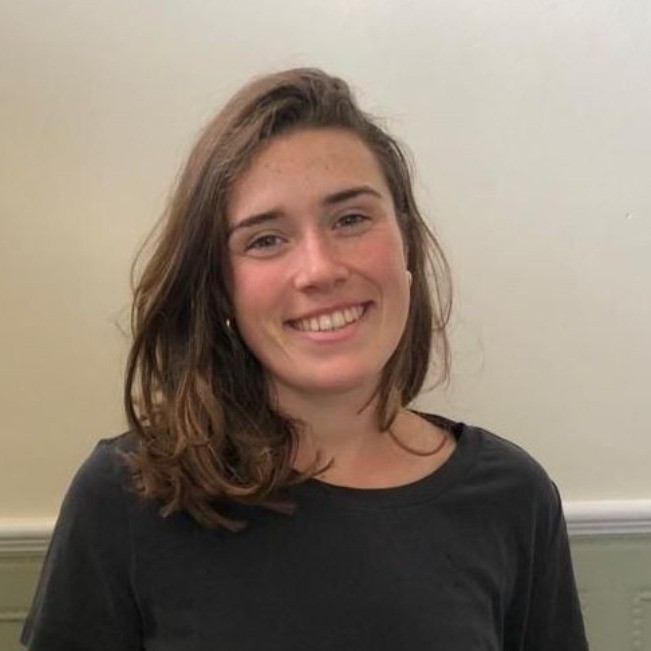
“It was through making the Trials Methodology Podcast with Georgiana Synesi that I began to appreciate just how interesting (and complicated!) the field of trials methodology is.
It’s a field full of question asking, and question answering, and questioning which of the questions to do the answering of! Lots of What?! How?! When!? I love how meta it can be (research on methods of methods of methods….).
It is also a field full of inspiring women who I’ve learned a lot from – from podcast interviewees, to supervisors, to fellow PhD friends.”
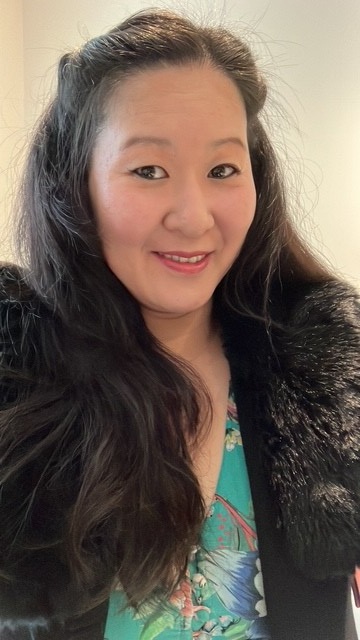
“I am a medical statistician working on clinical trials, my role is to help work out which treatments are most effective. We help design the trials to make sure the research question that the doctors have, is answered in a fair way and at the end of the trial we use the data collected to work out whether the treatment being investigated is better than the current standard treatment. This helps inform which treatments are used in the future. At the moment I am working on a trial that is looking at if a removable splint is as good at helping pain and improving function as a plaster cast for treating a broken wrist.
One of my first jobs was working directly with patients in hospital who had cancer as they took part in clinical trials, explaining the trial to them and then organising their pathway through the trial and helping collect the data needed for the trial. This role was very enlightening, seeing how these people were keen to help with the research to find a better treatment as well as the hope it gave to them. This made me want to help more with the design of trials to play my part in ensuring that the patients’ contributions to research were used to their full capacity with well-designed research and I enjoy working out the correct way to answer the research question and finding that end result.
I wish I knew about the range of different jobs out there to do with science when I was at school, beyond the traditional. I enjoyed maths at school but didn’t want to be a banker so ruled it out as an option for university. If women and girls are more aware of the different roles within science (including a medical statistician role) then we’ll have a broader range of people contributing their ideas and different qualities to our work to improve healthcare outcomes.”
“When I qualified as a pharmacist, I didn’t want to be pigeon-holed in one particular clinical area and wanted to be at the forefront of medicine, so I took a chance at a clinical trial pharmacist job and haven’t looked back since.
I love the clinical passion and expertise in this unit. I love what I do because I get to make a difference and open options for cancer patients for their patient care and provide them hope.
Having a daughter myself now, I always tell her that there are no limitations. Clinical excellence or scientific passion isn’t based on gender, it is based on a spark inside you and if helping people, some who may be at the end of their hope, is something that fills you with joy, then science is definitely for you. The world stops functioning without science.”
Find out more about some of the trials being done around the Network to improve women’s health here.
Read our piece marking International Day of Women and Girls in Science here.



If you have any questions about the site, please feel free to contact us. We are always looking for ways to better serve our members - YOU are important to us!
If you have any questions about the site, please feel free to contact us. We are always looking for ways to better serve our members - YOU are important to us!