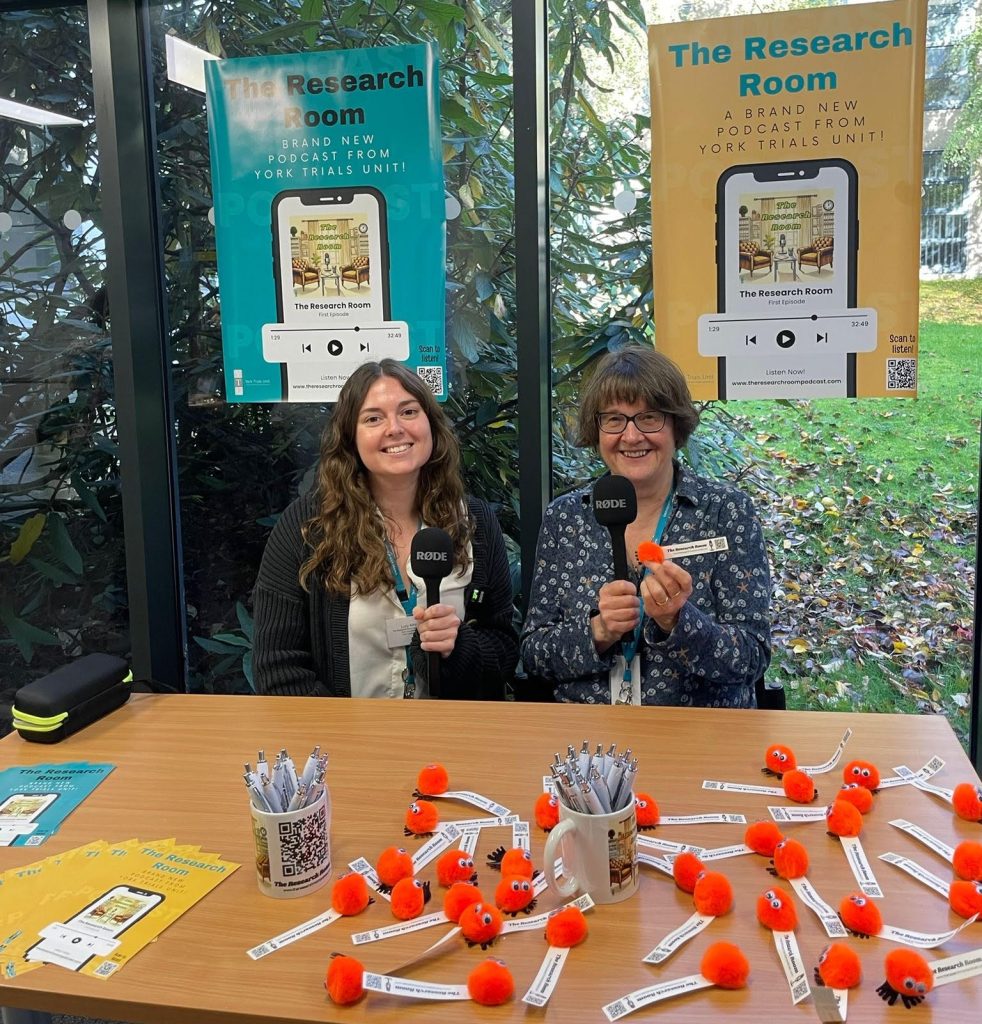
Recognising the Importance of Women and Girls in Science

Recognising the Importance of Women and Girls in Science

Why International Day of Women and Girls in Science Matters

International Day of Women and Girls in Science highlights the vital contribution women make to science and research, whilst drawing attention to the persistent gender inequalities that limit progress. Women and girls represent half of the world’s population – and half of its potential. Ensuring their full and equal involvement in science as researcher or study participant is therefore not only a matter of fairness, but essential to achieving high‑quality, impactful, and sustainable research.

The theme of International Day of Women and Girls in Science 2026 is “Synergizing AI, Social Science, STEM and Finance: Building Inclusive Futures for Women and Girls”. Read more here.

The “Leaky Pipeline”: Structural and Cultural Barriers

Despite progress in recent decades, gender equality in science remains elusive. Globally, only one in three scientists is a woman. In the UK, whilst women make up more than three quarters of the NHS workforce, including large numbers of scientific and technical staff, disparities remain stark within academic medicine. Women represent less than 40% of the medical academic workforce, and their representation declines sharply with seniority with only just over one fifth of professors being female.

These patterns reflect structural and cultural barriers that continue to shape scientific careers. Limited access to flexible and part‑time roles, challenges in balancing caring responsibilities, and perceptions that non‑linear or less‑than‑full‑time working is incompatible with progression all contribute to the well‑documented “leaky pipeline”. This is evident in research funding pathways, where applications from women decline at each successive career stage, despite strong participation earlier on.

Image for decorative purposes only

Addressing these inequalities matters for science itself.  A diverse research and educational workforce broadens the type of questions that are asked, the populations that are studied, and the solutions that are developed. Greater diversity among researchers and research leaders strengthens methodological rigour, enhances relevance, and supports better outcomes for patients and communities, particularly those who are under‑represented or experience health inequalities.

Women’s Leadership Across the CTU Network

The CTU Network is committed to supporting an inclusive and collaborative research environment. Across the Network, women play a leading role in delivering high‑quality, non‑commercial clinical trials. Over 60% of registered CTUs have a female Director, Co‑Director or Deputy Director, with women represented at all levels and across all disciplines including statistics, data management, quality assurance, IS, and trial operations. Women also chair or co‑chair the majority of our network groups.

On International Day of Women and Girls in Science, we recognise the achievements of women across the CTU Network and reaffirm our commitment to reducing barriers, supporting progression, and ensuring that clinical research benefits from the full breadth of talent and expertise available.

The Importance of Research into Rare Diseases

Professor Mahesh Parmar, Director of the MRC Clinical Trials Unit at UCL, discusses the impact of clinical research into rare diseases

Why robust research into rare diseases matters

Rare diseases collectively affect tens of millions of people worldwide, yet each individual condition often impacts only a small number of patients. This creates a persistent evidence gap. Limited clinical expertise, fragmented patient populations, and a lack of commercial incentives can all impede the generation of high‑quality evidence to inform diagnosis, treatment, and care. Research into rare diseases is therefore essential not only to improve outcomes for affected individuals and families, but also to reduce health inequalities and ensure that healthcare systems are equipped to deliver effective, evidence‑based care across all conditions.

Logo for the Rare Disease Day campaign

The unique challenges in conducting rare disease trials

Image of children playing with the words research into rare diseases improves outcomes for individuals and families and reduces health inequalities.

Conducting robust clinical research in rare diseases presents distinctive methodological and practical challenges. Small sample sizes, heterogeneous disease presentations, and limited natural history data make trial design, recruitment, and analysis particularly complex. 

The UK’s Clinical Trials Unit (CTU) model plays a critical enabling role. CTUs bring together multidisciplinary expertise in trial design, statistics, data management, regulatory compliance, and patient and public involvement, allowing rare disease studies to be conducted to the same high standards as trials in more common conditions.

The critical role of played by Registered Clinical Trials Units

The UK CTU infrastructure supports rare disease research in several key ways. First, CTUs provide methodological innovation, including adaptive designs, Bayesian approaches, and specific adapted methods for rare disease trials which are needed when participant numbers are limited. Second, they offer operational capacity to coordinate multicentre and often international studies, helping to overcome the geographic dispersion of patients. Third, CTUs support close collaboration with clinicians, patients, and charities, ensuring that studies address meaningful outcomes and are feasible and acceptable to participants.

By embedding rare disease research within a nationally coordinated CTU network, the UK maximises the impact of public and charitable investment, reduces duplication, and accelerates the translation of research findings into practice. This model helps ensure that people living with rare diseases are not excluded from the benefits of rigorous clinical research, and that high‑quality evidence can inform care even where patient numbers are small.

You can read about some of the trials taking place across the Network here.
To keep up to date on our activities, follow the Network on LinkedIn and Bluesky.

Marking World Cancer Day 2026

On World Cancer Day, we recognise the researchers, clinicians and organisations working together to test new ideas and build the evidence needed to improve cancer care in the future.

The day also gives us an opportunity highlight some of the research that could make cancer treatment more effective and less difficult for patients.

Below are just three of the potentially life changing clinical trials being led by Registered Clinical Trials Units. 

Follow us on BlueSky and LinkedIn to find out more about the valuable work being undertaken across the Network.


A kinder way to deliver chemotherapy

At Cardiff University’s Centre for Trials Research, we are supporting the PICCOS study, which is looking at a different way of giving chemotherapy to people whose cancer has spread to the lining of the abdomen. This can happen in ovarian, bowel and stomach cancers.

When cancer spreads in this way, it can be very hard to treat. Standard anti-cancer treatment is usually given through a drip or tablets and travels around the whole body. It doesn’t always reach cancer in the abdomen very well and can cause side effects that have a big impact on everyday life.

PICCOS is testing whether chemotherapy works better when it is delivered directly to where the cancer is. The treatment, called PIPAC, delivers chemotherapy as a fine spray into the abdomen during keyhole surgery. This approach has been used in other countries for several years, but in the UK, it is only available through research studies.

The study is comparing this approach with standard chemotherapy to see which works better and whether it could help people live longer or feel better during treatment. This kind of research is essential before new treatments can be offered routinely by the NHS.

The trial is being delivered by teams from Cardiff University and Cardiff and Vale University Health Board. PICCOS is funded by the National Institute for Health and Care Research (NIHR).

To read more, please visit https://www.cardiff.ac.uk/centre-for-trials-research/research/studies-and-trials/view/piccos


Improved treatments for prostate cancer

The STAMPEDE clinical trial and the STOPCAP M1 meta-analyses looked at several new treatments for prostate cancer to see which ones could help men live longer. STAMPEDE used the multi-arm multi-stage (MAMS) innovative design, and STOPCAP M1 used the FAME meta-analysis approach. These innovative ways of running and combining trials meant that results were available much more quickly and reliably than with traditional methods.

The research showed strong evidence that adding treatments like docetaxel, abiraterone and targeted radiotherapy to the prostate, to standard therapy, helps men live longer and reduces the chance of their cancer returning. These findings changed treatment guidelines around the world. In the UK, this has already given prostate cancer patients up to 31,250 extra years of life combined.

The MRC Clinical Trials Unit at UCL made this possible by designing efficient trials, bringing together large groups of researchers and hospitals, and carefully combining results from multiple studies. Their systems helped trials recruit quickly, test new treatments sooner and produce high‑quality evidence to guide doctors and improve patient care.

Find out more about these and other studies undertaken by the MRC CTU at UCL here.


Access to promising new treatments for B-cell non-Hodgkin Lymphoma

Most young people who get B-cell non-Hodgkin Lymphoma (B-NHL) get better with treatment, but if they don’t get better or if their cancer comes back there is no other good treatment to help them.  This means the way clinical trials usually work is not good for these patients because it would take too long to test 1 new treatment at a time.  Instead, the Glo-BNHL trial offers lots of promising new treatments for patients and their doctors to choose from. 

Companies with new treatments that might benefit patients apply to take part.  A team of experts asses the suitability of the treatment and prioritise those that are most promising.  Treatments will be regularly assessed and those that do not show statistically significant benefits for patients will be deprioritised to make way for new treatments. Where treatments prove of benefit to patients, companies will use the data from Glo-BNHL to apply for marketing authorisation, thereby evolving standard of care.

Patients in the UK are already able to access two new treatments, both of which are first-in-child, and patients in the US, Canda, Australia, New Zealand and across Europe will soon be able to access them too.

The concept came from the 2nd ACCELERATE Paediatric Strategy Forum, which examines the primary concerns in paediatric oncology. The Cancer Research UK Clinical Trials Unit (CRCTU) has since been central to the success of Glo-BNHL, bringing together trial management experts, statisticians and the wider research community to design and deliver a trial with patient benefit at the centre.

The team at the CRCTU is proud to work with 5 patient advocates, who sit on the Trial Management Group and Trial Steering Committee and form the Glo-BNHL Patient Advisory Group, and with leading academics and clinicians from around the world.  Crucially, the CRCTU involves Early Career Researchers to ensure that the next generation of researchers can learn from today’s leaders.

Find out more about the Glo-BNHL trial here.


How to Be a Great Chief Investigator for Clinical Trials – New Workshop Date Announced

The UKCRC Registered Clinical Trials Unit (CTU) Network is delighted to announce the next in its series of workshops: “How to be a Great Chief Investigator for Clinical Trials”, taking place on 27 January 2026 at Queen Mary University London.

Feedback from the pilot series of workshops in 2024 was overwhelmingly positive, leading to an expanded programme for 2025 – 2028. The initiative has already welcomed over 160 delegates across five sessions, with four more currently planned for 2026.

All sessions to date have received CPD accreditation, ensuring participants’ professional development is recognised.

The workshop is designed to equip researchers with the skills and knowledge necessary to excel as Chief Investigators, through:

~ Expert guidance from experienced Chief Investigators with a diverse range of backgrounds and specialties.

~ The opportunity to meet and gain insights from specialists at Registered CTUs, including statisticians and trial managers.

~ Interactive activities to develop practical understanding of the issues.

~ A collaborative learning environment that fosters peer support.

A key feature of the workshop is the opportunity to develop your own peer-support network, enabling ongoing collaboration and shared learning beyond the event.

For further information, and to secure your place, please click here.


Improved outcomes for patients and participants through knowledge-sharing and collaboration is central to the UKCRC Registered CTU Network’s mission, as outlined in its 2025 – 2030 Strategy:

“Our commitment to innovation and learning ensures trials are designed and delivered with excellence, maximising impact while minimising waste.”

This programme also supports the Network’s priorities to develop and nurture the CTU leaders of the future, ensuring sustainability and excellence in clinical research, and to provide an open and supportive environment across both CTUs and the wider research community.

Find out more about the Network’s Strategy for 2025 – 2030, please click here.

Increasing patient safety in clinical trials – new protocol deviations routemap released

We are pleased to announce the release of a new tool to help trial teams manage protocol deviations.

Clinical trials follow a protocol that is often more than 100 pages long. The protocol describes all the trial processes including everything about how potential participants should be approached, how treatment should be delivered, and the follow-up regimen.

Whenever an action occurs (or does not occur) as described in the protocol, there is a risk for participants. These protocol deviations need to be logged and reviewed. Should there be an immediate change to the protocol? Is the deviation a serious breach which should be reported to the UK regulator (MHRA)? Are there changes to the protocol that would make the trial easier for patients or site staff or those at the Clinical Trials Unit?

We have created a protocol deviation routemap to guide those running clinical trials through the protocol deviation process and provide a safer clinical trial for participants.

You can view or download a copy of the routemap here.

World Patient Safety Day 2025

World Patient Safety Day was established by the World Health Organization (WHO) to promote global awareness and action on patient safety. It aims to bring together patients, families, healthcare workers, policymakers, and communities to improve safety in healthcare systems worldwide.

Patient and participant safety within Clinical Trials is at the forefront of clinical trial delivery.  The UK has a very robust structure in place to ensure all clinical research is planned, delivered, and reported in line with legal requirements and guidance which ensures patient safety and data integrity (to ensure data generated within clinical trials is reliable) at all times*. 

The UKCRC Registered CTU Network has a key role within the structure of clinical trial delivery in the UK as it has responsibility for managing a process which provides a registration status to UK Clinical Trial Units (CTUs)**.

This process ensures that each registered CTU has the required level of experience and expertise in place to see a research project from concept thought to reporting. In this way, registration acts as a hallmark of quality.  

Potential investigators, research staff, funders of clinical trials and – importantly – participants and patients can therefore be confident of CTU expertise, quality assurance, and appropriate systems being in place throughout the trial lifecycle.  

CTUs work across a wide variety of medical conditions, with some specialising in paediatric research and medicines for children – the theme for this year’s World Patient Safety Day.  Units also lead the way in novel trial methodology such as the use of adaptive and platform trials

Further information on all registered CTUs can be found here.


*There are several regulations (legal requirements) in place for the conduct of clinical trials. CTUs have processes in place to ensure compliance with these, and there is oversight of activities to ensure adherence with patient safety being considered and reviewed at all times.   

**CTUs are specialist non-commercial units with the expertise to design, conduct, analyse and publish clinical trials. Each unit has specialist staff across a number of roles including statistics, trial management, data management, and quality assurance.  Patient safety is the priority at all times starting from the development of the initial research idea, throughout the conduct of each trial, right up until closure a.   CTUs routinely ensure that patient and public involvement is embedded within every clinical trial, with Patient and Public members usually a member of Trial oversight groups.

EXPLAIN – World Patient Safety Day 2025

Wednesday 17 September 2025 is World Patient Safety Day. On this day, healthcare professionals, researchers, and others work to increase global awareness and action on patient safety.

However, patient safety is a year-round commitment and is always at the forefront of the clinical trials that are managed across the UK and beyond by Clinical Trials Units (CTUs) registered by the UKCRC Registered CTU Network.

Registered CTUs devise and manage many clinical trials that collectively cover patients and participants with multiple diseases/conditions and/or injuries at all ages. 

Find out more about the work of registered CTUs here.

In order to promote a greater understanding of patient safety amongst research participants, three of the CTUs in the Network – the Nottingham Clinical Trials Unit, the Centre for Clinical Trials Research, Cardiff University, and the Oxford Clinical Trials Research Unit – have, in collaboration with patients and their representative, produced a short animation explaining how safety is overseen in clinical trials.

Please visit the EXPLAIN project website https://explain.octru.ox.ac.uk to watch the animation. The page includes a link to request a copy of the animation for use in any research in any of six different language options. There are also explainer animations covering consent and randomisation.

Click here to find out more about the work of the Network.

Response from UKCRC Registered CTU Network on the Industrial Strategy and the Life Sciences Sector Plan

We strongly welcome the new UK Industrial Strategy and associated Life Sciences Sector Plan which recognise the value to the health and wealth of our communities of life sciences and clinical trials. This is a sector which creates high value jobs, whilst simultaneously driving to improve our lives through living longer better. The recognition of the importance of long term relationships with industry, talent management and more risk proportionate regulation are key parts of our strategy as a network as well as enhancing how we maximise the use of existing data in driving forward our science.  As a UK wide network with members in all four nations of the UK, who themselves design and run UK wide (and international) clinical trials, the commitment to UK wide joint working both strategically and operationally is excellent news. 

There are a number of areas that we would like to see developed further however – the importance of commercial collaborative trials being a key one.  These trials, including what have been known as investigator-initiated trials (IIT), which are fully or partially funded by industry but led by an NHS or University sponsor are a core part of our ongoing partnership with industry.  They represent opportunities for derisking the testing of new or existing drugs for a wider range of conditions than a company is targeting.  These then may or may not lead to licensing or license changes depending on the results of the trial.  In the past we have seen initiatives like the Cancer Research UK and AstraZeneca (AZ) Combinations Alliance which offered up drugs and some joint funding to researchers who wanted to test them in cancers which were not the target for the commercial trials supported by AZ.  One of these trials evaluated the use of Capivasertib for breast cancer and following this was approved by NICE in 2025 and is now being used to treat patients. We also need to explore how we more optimally work with industry in sharing our trial methodology expertise and this will be part of what we are aiming to do across our network in the near future.

We are delighted to see clarity on the streamlining of regulation, although it is important that we recognise risk proportionality for all entities involved in a regulatory process, not a shifting of burden from one sector to another.  Processes need to be proportionate for industry, for regulators, for researchers and for NHS organisations trying to implement the research. For example recent legislative changes to bring in notifiable trials are very welcome, but operationally, this is only proportionate for the MHRA who will not have to give approval, but that everyone doing a notifiable trial will be expected to have the same level of documentation upon inspection. To truly deliver reduced (but appropriate) regulatory burden in this area we need to move to a shared understanding of risk proportionality.

The other two areas that we feel are under covered in this plan are the importance of clinical academics and how trials can support subsequent implementation of interventions.  Clinical academics are essential in delivering a strong life sciences sector which can make a difference for the NHS and the public.  Considering how we develop these individuals and roles in a three-way relationship between academia, NHS and industry would build on recent Office for Strategic Coordination of Health Research (OSCHR) reports (link) and support longer term partnership building across the three sectors. Similarly, many academic led trials incorporate considerable aspects of implementation research (such as process evaluations) and these inform the operational implementation of an intervention in the NHS over and above any regulatory or procurement processes.  In designing an eco-system it is important to remember this connected opportunity rather than establishing separate systems and processes.

Overall there is a lot that is good here, but also plenty for us all to work on to shape the future of life sciences in the UK and we look forward to working in partnership to deliver this vision.

Read the Life Sciences Sector Plan here.

New PeRSEVERE Paper Published

New Paper Describes the Development of the PeRSEVERE Principles & Guidance

The PeRSEVERE project was started within the UKCRC Registered CTU Network in 2019 to address the lack of detailed guidance for managing ‘withdrawal’ of consent and other participation changes in our trials.

Participation changes can be complex, and it can be unhelpful to view them as binary – i.e. to view the only possible participation statuses as ‘taking part’ or ‘withdrawn’.

Motivated by what they thought shouldn’t be happening in their trials, a multi-disciplinary group came together to try to agree how participation changes should be managed.

A new paper published by the project group, entitled Standardising management of consent withdrawal and other clinical trial participation changes: The UKCRC Registered Clinical Trials Unit Network’s PeRSEVERE project describes how they developed the PeRSEVERE principles through discussion and debate within a large, multidisciplinary collaboration, including research professionals and public contributors.

The team took an inclusive approach to drafting the principles, incorporating new ideas if they felt they were within the project scope. The draft principles were then scrutinised through an international consultation survey which focussed on the principles’ clarity, feasibility, novelty and acceptability.

After finalising PeRSEVERE guiding principles, we developed accompanying implementation guidance using several sources such as the SPIRIT/CONSORT statements.

The principles and all accompanying guidance and resources are available at https://persevereprinciples.org/.

Previous publications arising from the PeRSEVERE project can be found here:

– A paper about their guidance and how it was developed with a group of public contributors

– A paper reporting the results of a survey of REC members for their views on the communications guidance

Red4Research 2025: Celebrating Healthcare Innovation

Launched in 2020, and now in its sixth year, the campaign continues to champion the critical role clinical research plays across all areas of healthcare.

The importance of clinical research has remained firmly in the spotlight since its launch. As the Department of Health and Social Care (DHSC) reiterates, research remains one of the most powerful tools we have to drive progress in healthcare—helping us to prevent, diagnose, and treat disease more effectively.

We are encouraged by continued government recognition of the value of research, affirming the UK’s commitment to clinical research excellence and our position as global leaders in early-stage and academic-led research.

We were delighted to see plans to speed up clinical research announced recently and are looking forward to the upcoming 10 year health plan!

https://www.gov.uk/government/news/unprecedented-boost-for-clinical-trials-under-10-year-health-plan

As experts independently assessed in high quality trial design, conduct, and reporting, CTU Network members are exceptionally well placed to support these ambitions and we continue to engage with policy makers, funders, and regulators on how to drive innovative research forward.

In 2025, Red4Research continues to spotlight and celebrate the dedication of everyone involved in clinical research—from participants and volunteers, to coordinators, clinicians, and support staff. Their work underpins the UK’s position as a global leader in health research and continues to transform care for patients and their families.

form

Get in touch

If you have any questions about the site, please feel free to contact us. We are always looking for ways to better serve our members - YOU are important to us!

(0113) 3439132

    Sign up to newsletter